
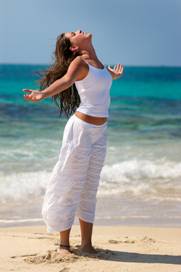
 The breath is one of the most
important things in Yoga. Breathing regulates your state of mind, your
emotions, your concentration, etc.
Breathing affects our
emotional state, concentration, stress level and sleeping patterns. Learning
to breathe the right way will help us be healthier, calmer and able to handle
more stressful life situations. Plus is makes you even feel better!!!
Breathing affects our emotional state, concentration, stress level and sleeping
patterns. Learning to breathe the right way will help us be healthier, calmer
and able to handle more stressful life situations. Plus is makes you even feel
better!!!
The right way to breath is
pushing the abdomen out while inhaling, and let it come back in while exhaling.
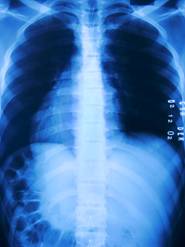
The diaphragm it’s the
membrane that separates the lungs from the stomach. When we breathe in our
lungs get fill up with air pushing the diaphragm down which makes the abdomen
come out. In the exhalation the abdomen comes back in unconsciously. It doesn’t
have any other way to go.
To be sure you breathe
correctly; you must divide the breath in three parts; lower abdomen, middle
abdomen, and chest.
When inhaling, first fill up
with air the lower abdomen, then the middle abdomen, and last the chest. When
exhaling, the air in the chest goes out first, then the air in the middle
abdomen, and last the air in the lower abdomen. Physically pushing the abdomen
out when inhaling, and in when exhaling, although when done correctly there is
no need to push the abdomen in. It’s done without effort. It doesn’t have any
other way to go but in.
It’s the same way when we
fill up a glass of water (inhaling). The first thing to be fill up is the
bottom of the glass (lower abdomen), then the middle part of the glass (the
middle abdomen), and the last thing will be the top of the glass (chest). When
drinking the glass of water (exhaling). First we drink the water in the top
(chest), and second, the middle part of the glass (the middle abdomen), and
last the water in the bottom (lower abdomen).
For most of the people, due
to society pressures, it’s just the exactly opposite way. The studies show that
around 40% of the people breathe incorrectly. Breathing this way for long
periods of time will develop in future different illness.
Just consciously breathing
forcing the abdomen out in the inhalation for around tree times it be naturally
picking up by your body.
The brain follows the breath.
If you are able to breathe from 1 to 4 times per minute it’s said you’ll
experience what is called the meditative state. Inhale and exhale its one.
It’s not about holding the breath in or out. It’s about to breath long and
deep. Very slowly, using the full capacity of the lungs, and exhaling
completely.
The best way to do it its
built it up little by little. The lungs capacity starts to expand, and as a
consequence your mind gets calmer, more balance, can concentrate better and
take better decisions.
The magic starts when you
master the exhalation. It seems that during the inhalation the mind it’s calmer
and one can hold the breath longer without struggles, but during the exhalation
there is a natural urge to expel the breath out to inhale again the sooner the
better. When this natural tendency is calm down, and the person it’s able to
peace itself, the person can access to hire states of consciousness.
A yogi should master the
ability to hold the breath in and out. Holding the breath in it seems always
easier than hold the breath out.
The reason to this is because
the brain will react when the carbon dioxide, CO2, levels are to high, but it
doesn’t react when the levels of oxygen, O2, go high or low.
Base on this fact, you will
be able to hold the breath in or out for longer periods of time, by taken
several inhales, or exhales. Blowing a little bite of air out, or in will
create a change in the levels of the carbon dioxide, CO2.
The correct way to hold the
breath is relaxing the muscles of the diaphragm, ribs, and abdomen, suspending
the breath.
To hold the breath in:
Breathe in, by pushing the
lower abdomen out, then the middle abdomen, and finally the chest. Hold the
breath in. And bring the chin in without creating tension in the neck or
shoulders.
To hold the breath out
Exhale, by releasing the air
in the chest first, then the middle abdomen, and finally the lower abdomen.
Hold the breath out. Lift the chest. Pull the chin in. Relax.
Stay as long as is
comfortable, if you feel dizzy stop immediately! This can be built up with time
be patience.

Benefits
Expansion of the lungs
capacity.
Helps to deal better in
stressful situations.
Builds up more efficiency.
 It seems both nostrils are
always working while breathing through the nose. But there is always one more
predominant than the other one and every 2 ½ hr switches unconsciously to the
other one.
The science of nostrils is
called Swara Yoga. It teaches that when a nostril is predominant the opposite
side of the brain it is dominant.
The right nostril it’s
directly related with the sympathetic part of the brain, the known “fight and flight”
mechanism. In the other side, the left nostril it’s directly related with the
parasympathetic part of the brain, the “rest and repair” mechanism.
According to this, breathing
to the right nostril will make you tap into a more energetic state of mind, and
breathing through the left nostril will make you relax, and calm down.
In today’s way of living
there is a tendency to use more the “fight and flight” mechanism. This
unbalances our state of mind to creating more stress, and lowering our immunologic
defenses.
Fortunately, there are
different basic breathing sets, Pranayamas, will help you to regain balance
again, and even will allow the yogi to tap into elevated states of being.
You should be able to switch
nostrils by concentrating on it. The left side it’s directly related
with calmness, and the right nostril with energy. So if can’t feel sleep at
night lie down on the right side, and with the pillow apply slight pressure on
the right nostril, and breathe through the left.
Yogi Bhajan used to teach us
when having an argument that you want to win, to be wise and wait 2 ½ hr. Then
bring the subject back. The whole mental state has been altering to the other
side.
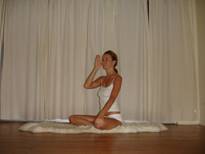 ALTERNATE NOSTRIL
Breathing through the left
nostril is calming, and breathing through the right nostril has an
energizing effect. To learn more about how the nostrils work (very interesting)
Click here.
How to do it
- Sit down in easy pose, or
rock pose. Keep the spine straight, and shoulders down. Like a yogi. - Close with the right thumb
the right nostril. The rest of the fingers are pointing up to the sky. - Inhale through the left
nostril. Close the left nostril with the right pinky, and exhale through the
through the right side. - Inhale through the right
nostril (always inhale through the nostril that you just have exhaled). Close
with the right thumb. Exhale through the left nostril. Inhale through the left
nostril and continue for 2 o 3 min. minimum. Repeat the same starting in the
left side.
Benefits
- Balance both hemispheres of
the brain. - Bring effectiveness and
calmness. - Alter mental states.
- Excellent before having an
important conversation or meeting that makes you nervous. - Good as a daily practice
when experiencing anxiety.
Awareness Techniques Different Types of Pranayama
It’s one of the most common
ways to breathe. This type of breathe is done by using the full capacity of the
lungs in both, the inhalation, and the exhalation, slowly, with no rush.
Normally done through the nose because it aids in the breathe control, although
it can be done through the mouth as well.
Benefits
- Increases the flow of oxygen
in the body, which promotes healing and relaxations states of being. - Prevents and decreases the
build up of toxins in the lungs. - Stimulates the production of
endorphins, brain chemicals, to fight depression. - Expands the lungs capacity,
which builds concentration, patience, flexibility, and resistance. This also
increases the secretion of the pituitary gland, which develops intuition. - Pumps the spinal fluid to
the brain, which increases energy. - Strengthens the aura, which
reduces insecurity, and decreases fear. - Cleanse the blood.
- Gives control over the
negative emotions, which help to break bad habits, and old patterns.
In our regular daily lives we
tend to use and small of the capacity of the lungs, instead of the 100% of it.
Breath of Fire is without a
doubt the most sophisticated Pranayama, breath control. It is an amazing tool
with anxiety, nerves, upset, fear, pain, sadness, etc.
Yogi Bhajan said that a
person has granted a determinate number of breaths from birth till his death,
and breath of fire it’s ONE, from the moment you start till you end. This means
you can prolong your life spam by doing Breath of Fire!
As mentioned before the way
we feel is directly related to the way we breathe. When dealing with
challenging or stressful situations in life, our body has an unconscious
tendency to pull the diaphragm in. This is the area of the Solar Plexus, where
the body keeps all the emotions.
There are seventy
two thousand nerves in our body. Out of this seventy two thousand, seventy two
are the most important. Out of this seventy two, ten are vital. In India they said that if the third Chakra, one of the focal points where all this seventy
two thousand nerves meet, it is not in balance, a person can not get healthy no
matter how much medicine is taking. A way to balance it out it’s doing Breath
of Fire in “stretch pose“.
- Release anxiety,
nervousness. Breath of Fire forces the diaphragm in and out. This has a direct
impact on the Navel center, releasing the emotions as well. - Readjust and strengthens the nervous system.
- Helps to regain control over
stressful mental states. - Helps the heart and
circulation, flux the toxins out of the blood stream. - Massages the internal
organs. - Releases toxins and deposits
from the lungs, mucous lining, and blood vessels. - Expands the lungs capacity.
How to do it
Breathing in and out through
the nose, also can be done trough the mouth, pulling the abdomen in during the exhalation towards the diaphragm, and out, in the inhalation. It is very fast, as fast as 2 or 3
times per second, and very loud. The people next to you should be able to hear
you. When perfected the rate should be 120 to 180 cycles
per minute!!
Do not expect to do it
perfectly well the first time, although this can be possible for some lucky ones. Instead,
you can start beginning by pushing the abdomen in while exhaling forcefully,
and loudly, making more emphasis in the exhalation, and start to building it up
from there, until you inhale the same amount of air that you exhale.
This is a very balance breath. Both inhalation and exhalation have equal power.
Another way to
start is practicing Breath of Fire for a few minutes in thirty sec periods, and
alternating it in between with Long Deep Breath. You can build it from there to
forty five seconds periods for two or three minutes. Soon you will be able to
do it for long periods of time without stopping or struggles.
Contraindications
There is one contraindication
when the woman it’s pregnant, or during the two first days of her menstrual
cycle. Instead do long deep breathing.
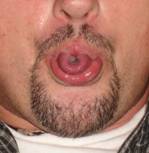
Sitali Pranayam, also known
as the “cooling breath”. It’s use with some kriyas, in segmented breaths, and
with Breath of Fire.
How to do it
- Curl the tongue into a U
shape. - Inhale through the curled
tongue. - Exhale through the nose.
Benefits
- It’s used to lower fevers or
the body temperature in hot days. - Aids digestion.
- If the tongue takes bitter
at first it’s a sign of detoxification. It will pass.
In some kriyas its use the
broken breaths.
How to do it
This type of breathing works
with a ratio for inhale, hold, exhale, and hold. i.e. 1:4:2:0, 4:16:2:0.
Inhale in four strokes through the nose, hold 4 sec, exhale in two strokes, and
hold the air out O.
Another common example is 4:1
ratio. Inhale in 4 equal strokes, like quick sniffs through the nose, and
exhale in one quick stroke through the nose.
Benefits
- Breaks depressions.
- Helps to heal you.
Make a little whole in your
lips from where the air comes out. Listen to the sound of the whistle as you
breathe. There are two ways to do this type of breath.
How to do it
One way is inhaling through
the nose, and exhaling through the mouth making a high pitched sound.
The other way is inhaling
through the puckered mouth making a high pitched sound, and exhaling through
the nose.
Benefits
- Activates the higher glands;
thyroid, and parathyroid. - Changes the circulation.
Most commonly use at the end
of the Bikram Yoga sequence.
How to do it
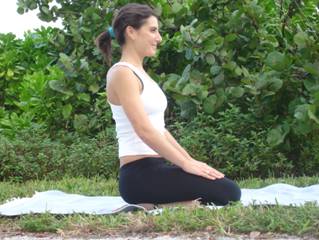
Sit in a comfortable sitting
position. The most commonly use sitting position for this type of breath is sitting
on the heels, although you any other one can be use too. Start exhaling
forcefully and noise the air out. At the same time you must push the abdomen
in. Then inhale through the nose quickly and force the air out, pushing the
abdomen in. This type of breath is done in a fast pace.
Benefits
- Relaxes the body and mind.
- Detoxify the body.