
BREATHING
Awareness Techniques Different Types of Pranayama
It’s one of the most common ways to breathe. This type of breathe is done by using the full capacity of the lungs in both, the inhalation, and the exhalation, slowly, with no rush. Normally done through the nose because it aids in the breathe control, although it can be done through the mouth as well.
Benefits
- Increases the flow of oxygen in the body, which promotes healing and relaxations states of being.
- Prevents and decreases the build up of toxins in the lungs.
- Stimulates the production of endorphins, brain chemicals, to fight depression.
- Expands the lungs capacity, which builds concentration, patience, flexibility, and resistance. This also increases the secretion of the pituitary gland, which develops intuition.
- Pumps the spinal fluid to the brain, which increases energy.
- Strengthens the aura, which reduces insecurity, and decreases fear.
- Cleanse the blood.
- Gives control over the negative emotions, which help to break bad habits, and old patterns.
In our regular daily lives we tend to use and small of the capacity of the lungs, instead of the 100% of it.
Breath of Fire is without a doubt the most sophisticated Pranayama, breath control. It is an amazing tool with anxiety, nerves, upset, fear, pain, sadness, etc.
Yogi Bhajan said that a person has granted a determinate number of breaths from birth till his death, and breath of fire it’s ONE, from the moment you start till you end. This means you can prolong your life spam by doing Breath of Fire!
As mentioned before the way we feel is directly related to the way we breathe. When dealing with challenging or stressful situations in life, our body has an unconscious tendency to pull the diaphragm in. This is the area of the Solar Plexus, where the body keeps all the emotions.
There are seventy two thousand nerves in our body. Out of this seventy two thousand, seventy two are the most important. Out of this seventy two, ten are vital. In India they said that if the third Chakra, one of the focal points where all this seventy two thousand nerves meet, it is not in balance, a person can not get healthy no matter how much medicine is taking. A way to balance it out it’s doing Breath of Fire in “stretch pose“.
- Release anxiety, nervousness. Breath of Fire forces the diaphragm in and out. This has a direct impact on the Navel center, releasing the emotions as well.
- Readjust and strengthens the nervous system.
- Helps to regain control over stressful mental states.
- Helps the heart and circulation, flux the toxins out of the blood stream.
- Massages the internal organs.
- Releases toxins and deposits from the lungs, mucous lining, and blood vessels.
- Expands the lungs capacity.
How to do it
Breathing in and out through the nose, also can be done trough the mouth, pulling the abdomen in during the exhalation towards the diaphragm, and out, in the inhalation. It is very fast, as fast as 2 or 3 times per second, and very loud. The people next to you should be able to hear you. When perfected the rate should be 120 to 180 cycles per minute!!
Do not expect to do it perfectly well the first time, although this can be possible for some lucky ones. Instead, you can start beginning by pushing the abdomen in while exhaling forcefully, and loudly, making more emphasis in the exhalation, and start to building it up from there, until you inhale the same amount of air that you exhale. This is a very balance breath. Both inhalation and exhalation have equal power.
Another way to start is practicing Breath of Fire for a few minutes in thirty sec periods, and alternating it in between with Long Deep Breath. You can build it from there to forty five seconds periods for two or three minutes. Soon you will be able to do it for long periods of time without stopping or struggles.
Contraindications
There is one contraindication when the woman it’s pregnant, or during the two first days of her menstrual cycle. Instead do long deep breathing.
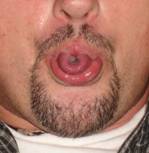
Sitali Pranayam, also known as the “cooling breath”. It’s use with some kriyas, in segmented breaths, and with Breath of Fire.
How to do it
- Curl the tongue into a U shape.
- Inhale through the curled tongue.
- Exhale through the nose.
Benefits
- It’s used to lower fevers or the body temperature in hot days.
- Aids digestion.
- If the tongue takes bitter at first it’s a sign of detoxification. It will pass.
In some kriyas its use the broken breaths.
How to do it
This type of breathing works with a ratio for inhale, hold, exhale, and hold. i.e. 1:4:2:0, 4:16:2:0. Inhale in four strokes through the nose, hold 4 sec, exhale in two strokes, and hold the air out O.
Another common example is 4:1 ratio. Inhale in 4 equal strokes, like quick sniffs through the nose, and exhale in one quick stroke through the nose.
Benefits
- Breaks depressions.
- Helps to heal you.
Make a little whole in your lips from where the air comes out. Listen to the sound of the whistle as you breathe. There are two ways to do this type of breath.
How to do it
One way is inhaling through the nose, and exhaling through the mouth making a high pitched sound.
The other way is inhaling through the puckered mouth making a high pitched sound, and exhaling through the nose.
Benefits
- Activates the higher glands; thyroid, and parathyroid.
- Changes the circulation.
Most commonly use at the end of the Bikram Yoga sequence.
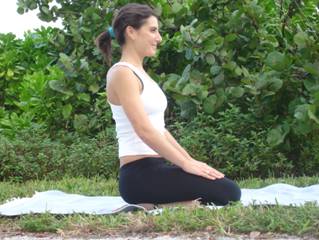
How to do it
Sit in a comfortable sitting position. The most commonly use sitting position for this type of breath is sitting on the heels, although you any other one can be use too. Start exhaling forcefully and noise the air out. At the same time you must push the abdomen in. Then inhale through the nose quickly and force the air out, pushing the abdomen in. This type of breath is done in a fast pace.
Benefits
- Relaxes the body and mind.
- Detoxify the body.
Continue to Meditation on the Breath
Hatha Yoga Table of Contents
- Basic Premises
- Benefits
- Bandhas
- Mudras
- Breathing
- Standing Postures
- Balancing Postures
- Backward-Bending Postures
- Twisting Postures
- Basic Sitting Positions
- Abdomino-pelvic Exercises
- Forward-Bending Postures
- Inverted Postures
- Meditation
- Relaxation
- Hatha Yoga Routines